top

BDZ vor Ort

Ihr Kontakt zu den Bezirksverbänden

Bezirksverband Baden
Kaiser-Joseph-Str. 254, 79098 Freiburg
+49 761 2020321 E-Mail
Bezirksverband Berlin-Brandenburg
HZA Frankfurt (Oder) Kopernikusstr. 25, 15236 Frankfurt (Oder)
E-Mail
Bezirksverband Bund
Wilhelmstraße 97, 10117 Berlin
E-Mail
Bezirksverband Düsseldorf
S-Heerenberger-Str. 107, 46446 Emmerich am Rhein
E-Mail
Bezirksverband Hannover
Im Fuchsloch 3a, 21379 Scharnebeck
+49 172 4106989 E-Mail
Bezirksverband Hessen
Postfach 1243, 64602 Bensheim
E-Mail
Bezirksverband Köln
HZA Köln Stolberger Straße 200, 50933 Köln
+49 221 94131020 E-Mail
Bezirksverband Nord
Mönkedamm 11, 20457 Hamburg
+49 40 5118733 E-Mail
Bezirksverband Rheinland-Pfalz
GZD IV Wiesenstraße 32, 67433 Neustadt a. d. W.
+49 228 30341017 E-Mail
Bezirksverband Saarland
HZA Saarbrücken Präsident-Baltz-Straße 5, 66119 Saarbrücken
E-Mail
Bezirksverband Südbayern
Hansjakobstr. 122, 81825 München
+49 89 43670487 E-Mail
Bezirksverband Westfalen
BV Westfalen c/o Stefan Walter Goldammerweg 30 58455 Witten
+49 231 95719001 E-Mail

Effective regulation starts with enforcement

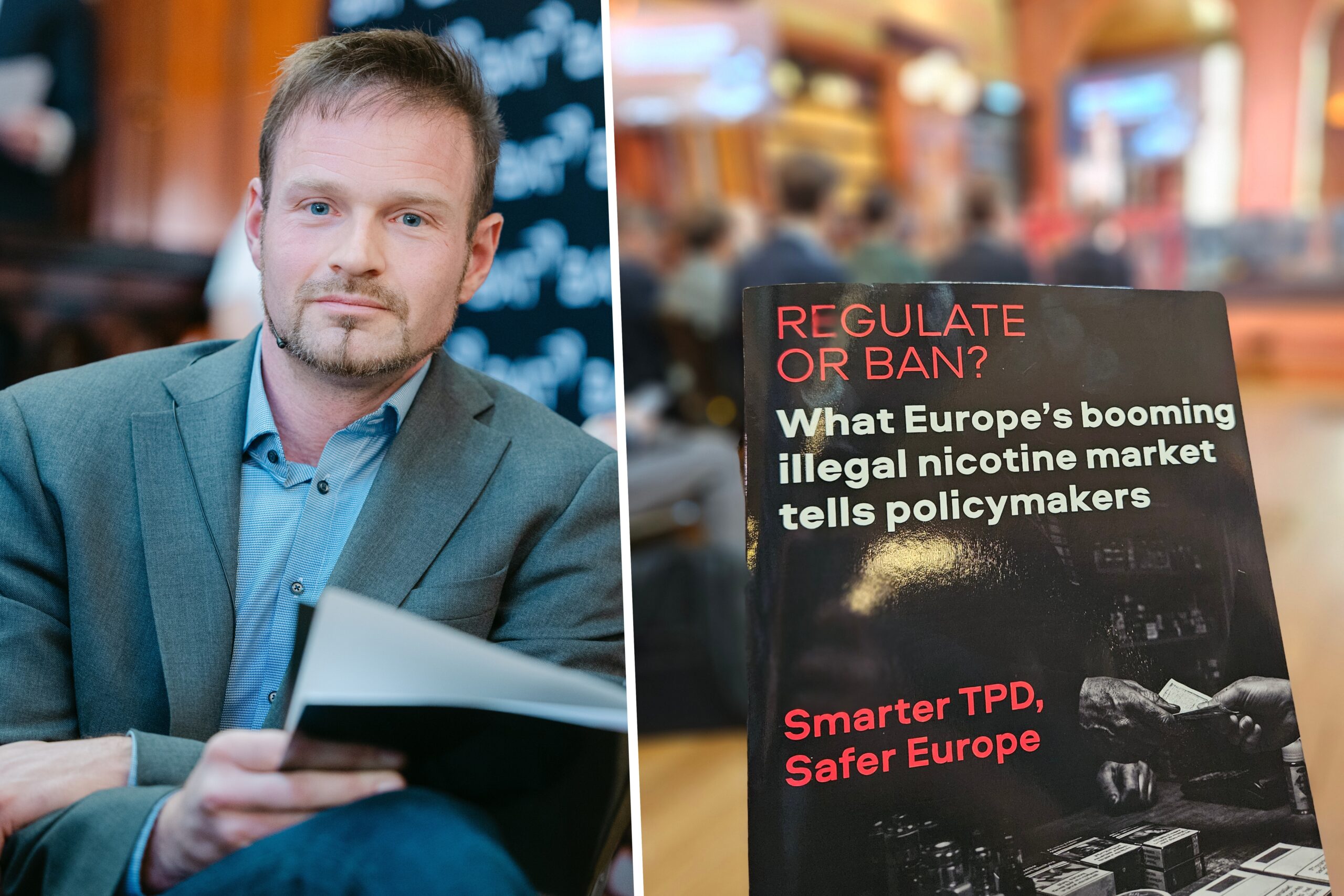
Public-health objectives, taxation and enforcement must be considered together. At a Brussels panel discussion on Europe’s illicit nicotine market on 28 October 2026, BDZ spokesperson Felix Schirner highlighted the practical challenges facing German customs and called for enforceable rules, stronger investigations and closer cooperation between authorities.

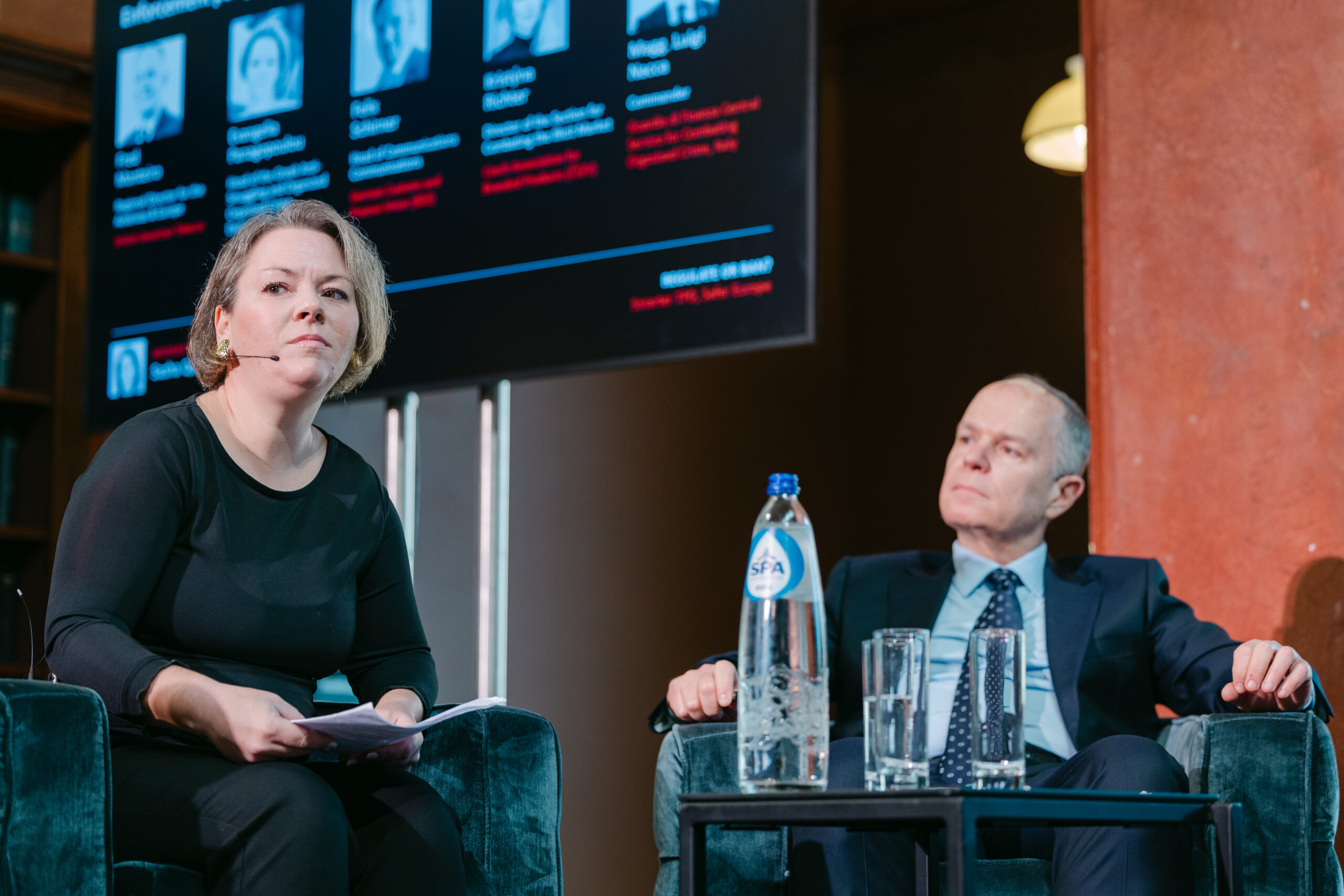
Under the title “REGULATE OR BAN? What Europe’s booming illegal nicotine market tells policymakers”, the event at Bibliothèque Solvay brought together policymakers, enforcement representatives, market researchers and industry stakeholders. Organised by BAT together with Euromonitor International, it explored national experiences and their implications for European tobacco and nicotine regulation.

The panel brought together Evaggelia Panagopoulou, Head of the Anti-Smuggling and Organized Crime Department within Greece’s Directorate for Strategy of Customs Controls and Offences; Frederico Pinto Monteiro, Regional Director AME at BAT; Maggiore Luigi Nacca, representing the Italian Guardia di Finanza’s Central Service for Combating Organised Crime (SCICO); Kristýna Richter, an AIT expert from Czechia and currently Section Director at the Czech Association for Branded Products; and Felix Schirner, spokesperson for BDZ, the German Customs and Finance Union.

The discussions addressed illegal manufacturing, cross-border distribution and online sales. Under the subtitle “Smarter TPD, Safer Europe”, the event connected the debate on the Tobacco Products Directive with practical enforcement experience.

The event also featured the presentation of Euromonitor International’s study “Impact assessment of different EU Member State approaches to e-cigarette regulation: Consequences for market integrity and illicit trade”. Key insights were presented by Shane McGuill, Global Lead at Euromonitor International. The study estimated that illicit e-cigarette and liquid volumes across the 24 EU markets covered grew by around 34% between 2023 and 2025, compared with approximately 14% growth in legal sales. These estimates highlight the importance of monitoring developments beyond the tax-paid market. The study’s definition of illicit trade covers both regulatory and tax non-compliance.
BDZ: Consider enforcement when designing the rules

The BDZ German Customs and Finance Union contributed the perspective of employees in Germany’s customs administration. The Zoll (Customs), with its Zollfahndung (Customs Investigation Service), is Germany’s leading federal agency with regard to the total number of organized crime investigations, in particular with regard to tobacco tax crimes. Schirner’s central message was that enforcement must be considered at the design stage of regulation, not as an afterthought. Public-health and fiscal objectives require legislation that authorities can apply effectively in practice.

He highlighted three dimensions of the German illicit market: illegal cigarette factories, distribution networks for illicit e-cigarettes and liquids, and the supply of untaxed shisha tobacco to local businesses. These require different responses, from investigations into production and logistics to monitoring online sales and conducting joint inspections.

The objective must extend beyond seizing individual shipments. Investigators need to identify organisers, suppliers, financial flows and criminal profits. While not every tobacco-related offence constitutes organised crime, coordinated production and distribution networks require sustained investigative capacity and international cooperation.

Schirner also addressed the interaction between product regulation, tax law, customs law and criminal law. Authorities must establish whether a product meets the requirements for sale, whether a tax liability arises and how much tax is due. Paying tobacco tax does not automatically make a product lawful to sell. Conversely, a prohibited product may still give rise to tax liabilities.

Examples involving additives in shisha tobacco and the tax treatment of glycerine illustrate the complexity of scientific assessment and legal classification. Customs and market surveillance authorities have distinct responsibilities. Joint inspections help bring these responsibilities together, but require staff, preparation and follow-up.

For BDZ, regulatory changes must also be assessed for possible shifts towards other products, cross-border purchases or illicit supply channels. Better monitoring is needed to distinguish public-health progress from market displacement.

In general, lawmakers should think more about how those legal areas work together in order to develop a comprehensive crime-fighting strategy, Schirner maintained. While authorities often think in terms of jurisdictions, criminals think in terms of business models – seeking loopholes to exploit.

The BDZ called for sufficient staffing, modern technical equipment and stronger customs investigations, alongside closer European cooperation. Clear rules must be matched by the resources needed to enforce them. Protecting public revenue, safeguarding consumers and disrupting criminal networks depend on that combination.