
European Networking
Exchange with the Belgian Customs Union CGSP-ACOD
As part of a visit to European institutions, a BDZ delegation met with representatives of the Belgian customs union CGSP-ACOD on February 4, 2026. The focus of the discussions was the situation in the Port of Antwerp, status issues within the Ministry of Finance, and differences in the organization of customs administrations. The professional dialogue clearly demonstrated the significant influence of national structures on the implementation of European reforms.
27.02.2026
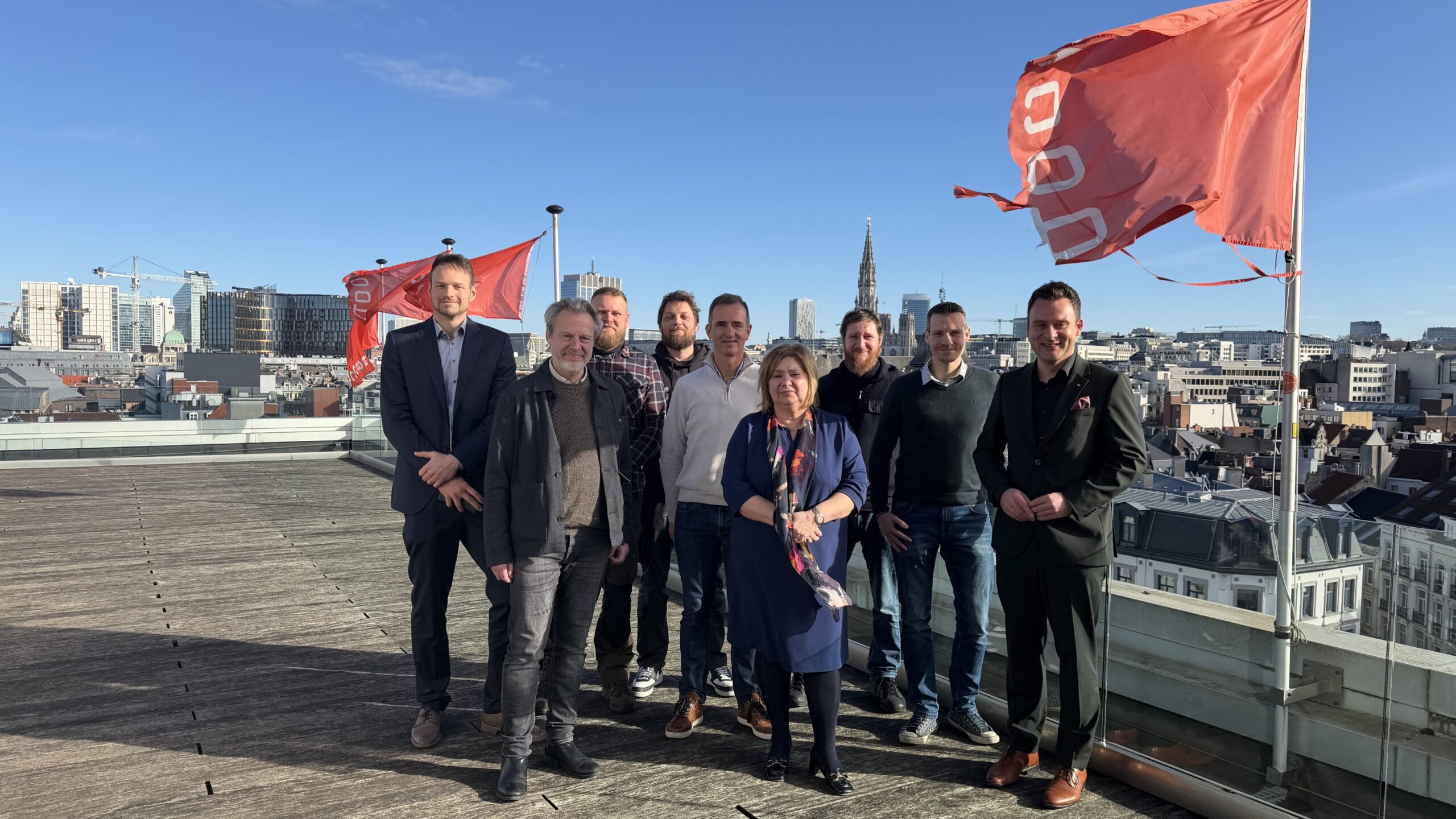
In addition to meetings with the European Commission and Members of the European Parliament, BDZ Federal Chairman Thomas Liebel and his team from the BDZ office also met with representatives of the Belgian customs union CGSP/ACOD in Brussels.
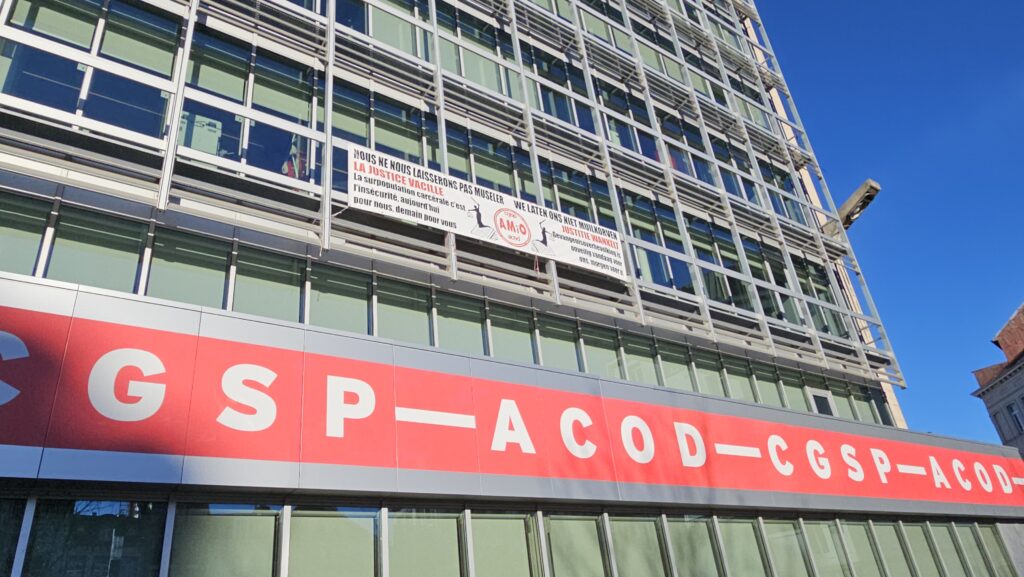
A unique aspect of the meeting arose from the Belgian union structure. The Belgian customs union is not organized as an independent professional union, but rather as part of larger umbrella organizations within the public sector. CGSP (Centrale Générale des Services Publics) is the French-speaking branch of the socialist trade union federation for the public sector, while ACOD (Algemene Centrale der Openbare Dienste) is its Flemish-speaking sister organization within the same union structure. Both represent, among others, employees of the customs and tax administrations. Belgium’s linguistic and federal structure is thus directly reflected in its union organization.
The meeting with the BDZ was kindly coordinated by Chris Reniers, President of CGSP-ACOD. The exchange began as an introductory meeting but quickly developed into a lively discussion among practitioners – with a clear focus on the operational realities of the customs administrations.
Two Customs Systems – Different Structures
It became clear right from the start: The organizational framework of customs in Belgium differs significantly from the German model.
Belgian customs employs around 3,000 people. While German customs is organized as an independent branch of administration with a clearly established civil service system within the purview of the Federal Ministry of Finance, the Belgian customs administration is more closely integrated into the general financial administration. Civil servant (“Beamte”) status within the Ministry of Finance has been partially reduced in recent years – with corresponding effects on status, salary structure, and long-term commitment to the service.
This structural comparison was particularly relevant for the BDZ (German Customs Union). European reform processes often presuppose national administrative realities – but do not always adequately consider their differences.
Operational Reality: Port of Antwerp and Digital Control Systems
A key topic was the situation in the Port of Antwerp. The BDZ emphasized the significant media interest in this area in Germany. As one of Europe’s largest container ports, Antwerp is a logistics hub – and simultaneously a hotspot for organized crime. The port has been under considerable pressure for years, particularly regarding cocaine smuggling.
Our Belgian colleagues described how the actual technical equipment on site does not always match public claims. While reports regularly refer to scanner capacity, the number of reliably operational and high-performance devices is significantly lower than officially stated. This has a direct impact on the depth of inspections.
From there, the discussion shifted to digital control systems and European IT structures – especially in the area of e-commerce parcel shipments. Although a European IT system for data transmission has been formally implemented, it is hardly used in practice because the relevant data is processed in the Belgian system. Operational control therefore remains national.
For the BDZ (German Customs Union), this point, which we have repeatedly emphasized in the German context, was particularly revealing: European IT infrastructure is only effective if it is technically mature, actually used, and offers operational added value. Otherwise, it remains a political signal without practical relevance.
Status Issues, Sovereign Function, and Security Policy Classification
Another key point of discussion was the role of customs as a security authority with sovereign functions.
Following the terrorist attacks in Brussels in 2016, the function of Belgian customs in the context of national security was reassessed. At times, customs was more strongly recognized as a security policy actor and, similar to the police, classified as a „first responder.“ At other times, this role was downplayed.
Belgian union representatives described this development as politically volatile—depending on the situation, the sovereign function is emphasized or withdrawn. For employees, this leads to uncertainty regarding their job profile, recognition, and status.
Especially against the backdrop of the partial reduction of civil servant status in the Belgian Ministry of Finance, it became clear how closely employment stability, the performance of sovereign duties, and security policy responsibility are intertwined.
The BDZ (German Customs Union) was able to contribute the German perspective, in which customs is clearly established as a sovereign security authority with permanent civil servant status (“Beamte”). The comparison revealed how strongly institutional frameworks shape daily work.
Working Hours, Workload, and Staffing Realities
The debate surrounding working hours also played a role. Increasing responsibilities—particularly in security-relevant areas like Antwerp—are encountering limited personnel resources. Discussions about adjusting working time models are being critically monitored by the Belgian trade union.
The parallels to Germany were unmistakable: rising demands, increasing internationalization of crime, and high political pressure coupled with strained staffing structures.
Substantive European Exchange
The meeting was not merely a symbolic occasion, but rather an open exchange on very concrete operational and structural issues. Both sides agreed to continue the dialogue—especially with regard to ongoing European reform processes and security policy developments.
For the BDZ (German Customs Union), the meeting was an important component of the Brussels week. While discussions with the Commission and Parliament focused on European legal texts and strategies, the exchange with Belgian colleagues revealed how these regulations are implemented in practice—and where they encounter structural limitations.
European customs policy is not solely determined on paper. The decision is made where containers are inspected, data is processed, and security-relevant tasks are actually carried out. The BDZ will gladly continue the exchange with our Belgian colleagues and thanks them for the interesting and insightful discussions.

BDZ Deutsche Zoll- und Finanzgewerkschaft
Friedrichstraße 169
10117 Berlin
Tel.: +49 30 863247640
E-Mail: post@bdz.eu
Werde Teil der größten und einflussreichsten Fachgewerkschaft in der Bundesfinanzverwaltung!
Mitglied werden



dbb vorteilswelt aktuell

Immobilienfinanzierung: Worauf es ankommt
Den Traum von den eigenen vier Wänden verwirklichen? Das dbb vorsorgewerk hilft bei der richtigen...
12.06.2025