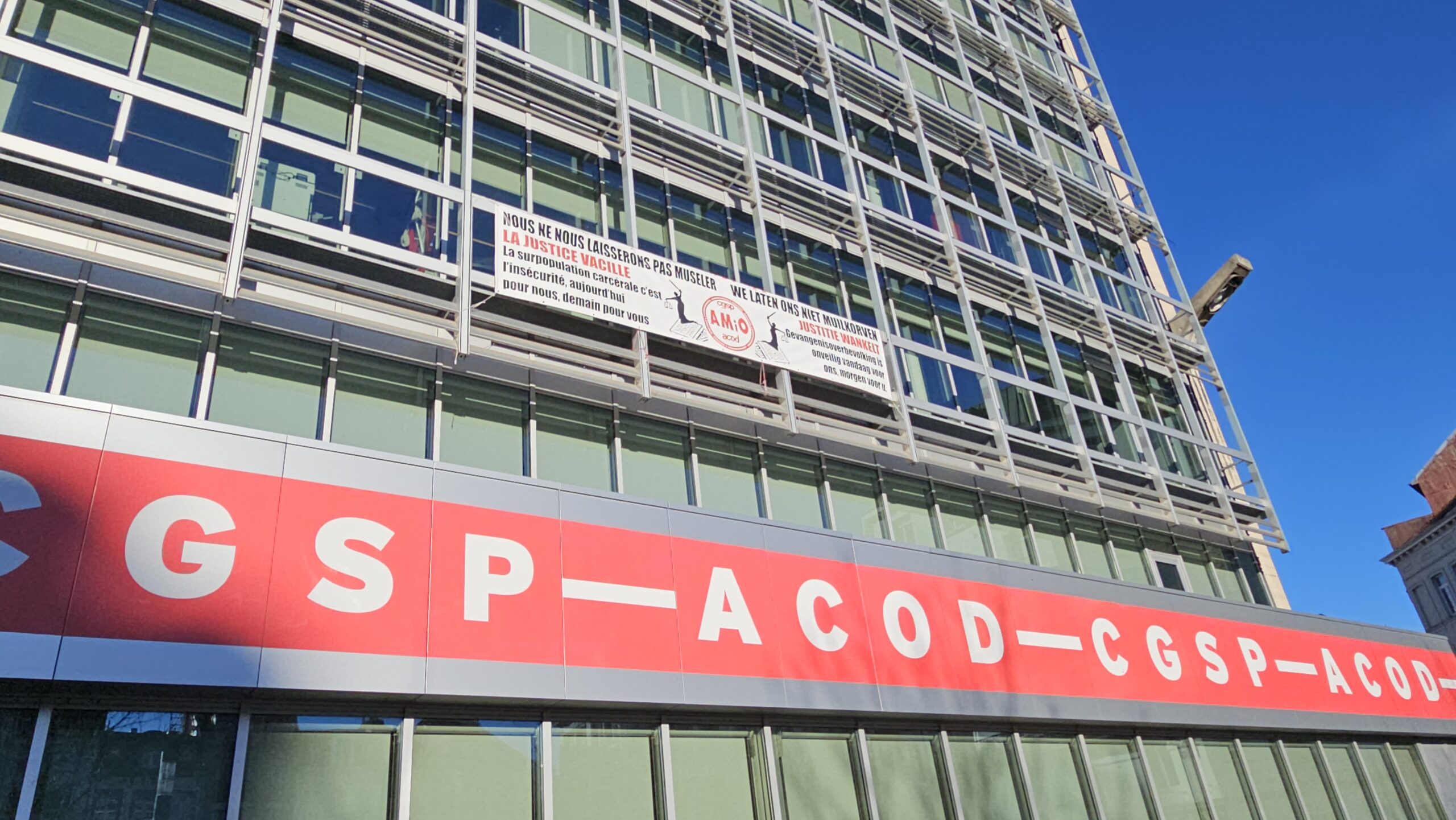


In addition to meetings with the European Commission and Members of the European Parliament, BDZ Federal Chairman Thomas Liebel and his team from the BDZ office also met with representatives of the Belgian customs union CGSP/ACOD in Brussels.
A unique aspect of the meeting arose from the Belgian union structure. The Belgian customs union is not organized as an independent professional union, but rather as part of larger umbrella organizations within the public sector. CGSP (Centrale Générale des Services Publics) is the French-speaking branch of the socialist trade union federation for the public sector, while ACOD (Algemene Centrale der Openbare Dienste) is its Flemish-speaking sister organization within the same union structure. Both represent, among others, employees of the customs and tax administrations. Belgium’s linguistic and federal structure is thus directly reflected in its union organization.
The meeting with the BDZ was kindly coordinated by Chris Reniers, President of CGSP-ACOD. The exchange began as an introductory meeting but quickly developed into a lively discussion among practitioners – with a clear focus on the operational realities of the customs administrations.
Two Customs Systems – Different Structures
It became clear right from the start: The organizational framework of customs in Belgium differs significantly from the German model.
Belgian customs employs around 3,000 people. While German customs is organized as an independent branch of administration with a clearly established civil service system within the purview of the Federal Ministry of Finance, the Belgian customs administration is more closely integrated into the general financial administration. Civil servant (“Beamte”) status within the Ministry of Finance has been partially reduced in recent years – with corresponding effects on status, salary structure, and long-term commitment to the service.
This structural comparison was particularly relevant for the BDZ (German Customs Union). European reform processes often presuppose national administrative realities – but do not always adequately consider their differences.